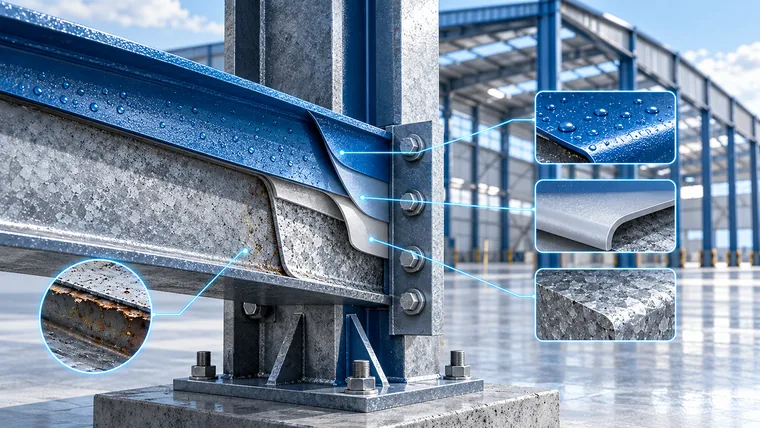
Corrosion is the price steel pays for its properties, but it is not an inevitable fate — it can be deferred for years by decisions taken before the first member arrives on site. Our system is layered in sequence: cleaning, then primer, then an epoxy coat, with a 15–25 year warranty and periodic maintenance. This guide explains why the system works, why surface preparation is half the life, how the environment is classified before choosing the system, where rust usually starts, the difference between paint and galvanizing, how design itself helps resist corrosion, the role of warranty and maintenance, with Syrian considerations and a pre-contract specification checklist.
Note: The protection system depends on the environment classification and design life, and is set out in a written specification for a specific project.
1. What protection system do we use?
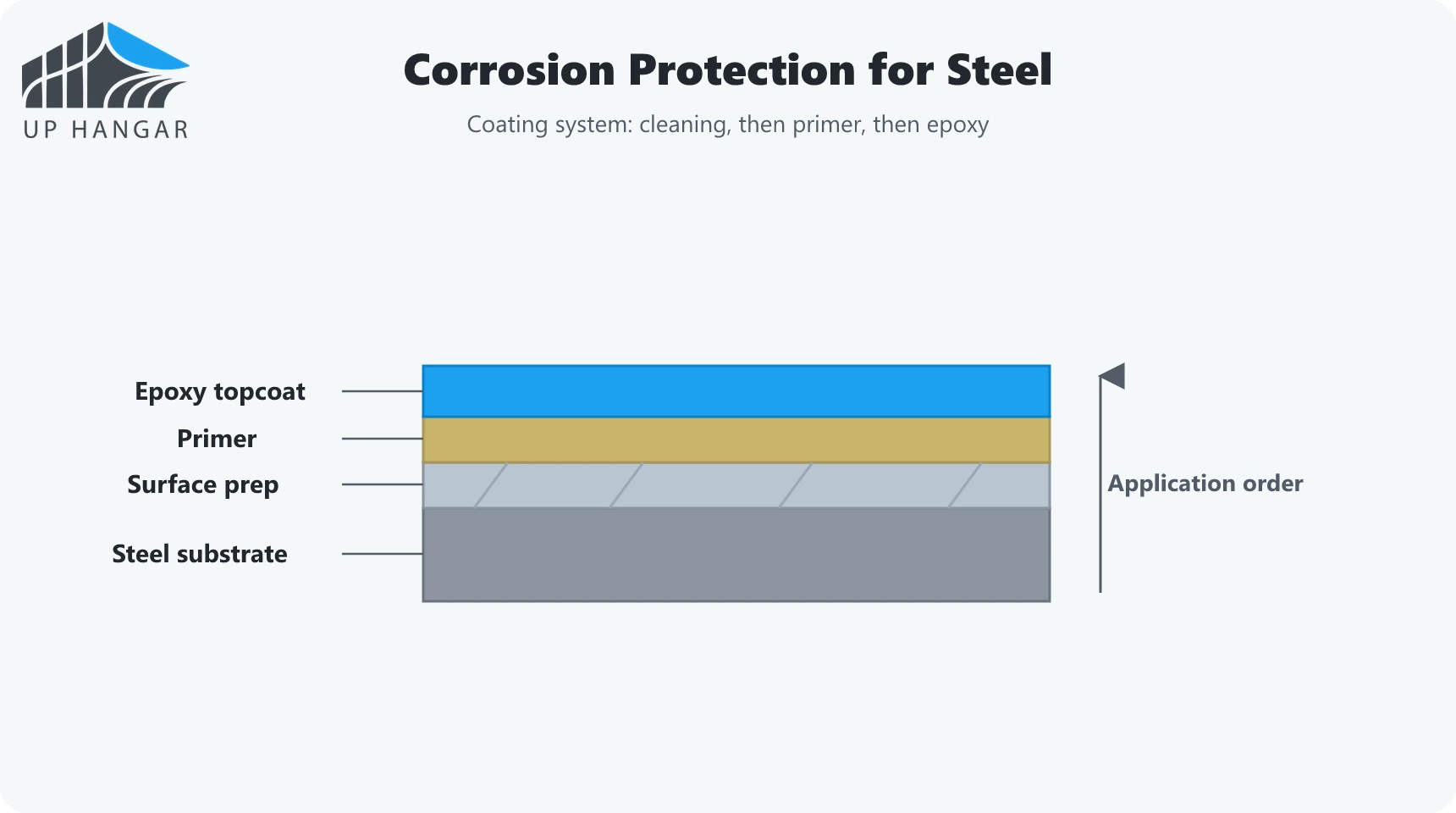
A three-layer system with distinct, complementary jobs. Cleaning (surface preparation) readies the metal for the coating to key into. Then primer provides adhesion and electrochemical protection against rust starting. Then an epoxy coat acts as a tough barrier against moisture and influences.
Each layer depends on the one before it: excellent epoxy over a poor primer over an uncleaned surface is a failed system despite the quality of the final layer. So the system is applied in full and in order, not as separate layers, and is chosen for the environment, not arbitrarily — a harsh environment needs more layers and a higher dry film thickness.
This article is part of our complete guide to steel hangar construction, deepening its protection section. Deeper detail on the system and coating is in corrosion protection: from surface preparation to the coating system.
Why three layers and not one thick one? Because each layer does a job the other cannot: the primer bonds to the metal and chemically prevents corrosion starting, while the epoxy physically repels moisture. One layer, however thick, does not combine both roles. And multiple layers give added safety: a scratch through the epoxy may leave the primer beneath holding for a time.
Each layer is measured by dry film thickness in microns, and the sum of thicknesses is what, with the environment, sets the expected life. A serious protection specification states each layer's thickness, not merely "primer and epoxy". The micron figure is what can actually be verified after application; a verbal description alone cannot be measured.
2. Why is surface preparation half the life?
Because a coating needs a clean, rough surface to key into and hold. Mill scale, old rust, oils and dust all prevent adhesion, so the coating separates as a complete sheet after a short time however excellent it is.
The rule proven in practice: an excellent coating over an untreated surface fails early, and an average coating over a well-prepared surface lasts. So a protection system is not measured by the paint type alone but by the surface-preparation grade before it. Whoever saves on preparation saves on half the life.
The preparation grade is stated in the specification, not left to judgement: from simple hand cleaning to sandblasting that gives an ideal clean, rough surface for harsh environments. The grade choice follows the environment and the required design life.
Sandblasting specifically does not only clean the surface but roughens it to a degree that increases the coating's contact area, so it holds more strongly. This is why a blasted surface outperforms a hand-cleaned one in harsh environments: not cleanliness alone but a measured roughness the coating keys into. So the roughness grade is specified in sensitive projects, not just cleanliness.
A fatal error is leaving a long time gap between preparation and coating: a cleaned surface begins to oxidise immediately if left exposed, so the preparation effect is lost. So the surface is coated right after preparation within a defined time window, a detail that separates protection that lasts from protection that fails despite the quality of its materials.
3. How is the environment classified first?
The protection system is not chosen before classifying the environment the structure will work in, because the environment sets the severity of attack on the metal:
- Dry interior: the lightest, such as an air-conditioned showroom.
- Ordinary exterior: weather-exposed but without special pollutants.
- Industrial: pollutants and vapours that accelerate corrosion.
- Coastal: the most severe, because airborne salt is highly corrosive.
Internal use enters the classification too: a fertiliser store or a poultry house has a harsh internal environment despite being indoors. And condensation accelerates corrosion from inside, so the environment classification ties to insulation. See steel building insulation guide.
4. Where does rust start?
Rust does not start randomly but at known points that can be protected in advance:
- Site weld locations where the original coating is burned off.
- Scratches that occur during transport and erection.
- Faying surfaces where moisture is trapped.
- Column bases where they meet the floor and water collects.
- Beneath purlins and fixing points.
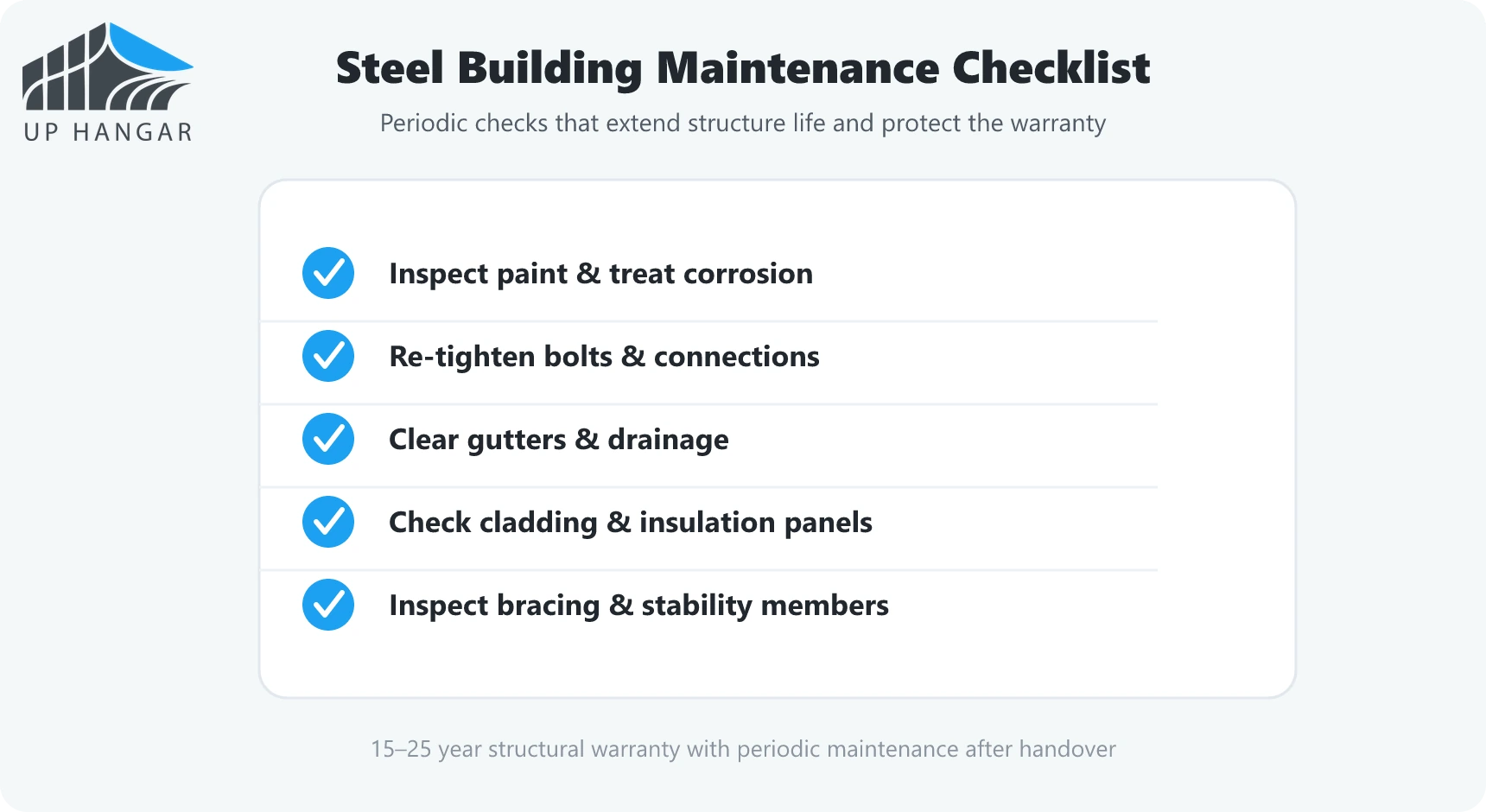
So an explicit site touch-up item is specified after erection and reviewed within site erection. Knowing these points makes periodic inspection targeted rather than random — see steel building maintenance guide.
5. Paint or galvanizing? And how do you choose?
The paint system (cleaning + primer + epoxy) is the most common and flexible, suits most environments and allows easy site repair. Galvanizing (hot-dip zinc) gives self-sacrificing electrochemical protection even at a scratch, and suits small members or very harsh environments, but is less flexible for site repair and costlier for some members.
The choice is not "better" absolutely but more suitable for the environment, the member and the budget: the two may be combined in one project — galvanizing for certain members and paint for the rest. What matters is that the system is clearly set in the specification, not left to the builder's judgement.
Whatever the system, the surface-preparation grade and the dry film thickness remain what determine the real life. Ask about them in the quotation as you ask about the paint type.
The advantage of galvanizing is that it protects even at a scratch: the zinc corrodes instead of the steel (sacrificial protection), so a small scratch does not start rust as it would with paint. But its drawback is harder site repair, and that the member size is limited by the dip tank. So it suits small and medium members more than the large frames that are hard to dip.
In practice, many projects use a good paint system because it balances cost, performance and flexibility. We use it as our base and turn to galvanizing when a harsh environment or a particular member justifies it, not as a general rule. The decision follows an analysis of environment, life and budget, not a prior preference.
6. How does design itself help resist corrosion?
The best protection starts before the paint, in the design itself. Smart details extend the life: good drainage that prevents water pooling on horizontal surfaces, avoiding pockets that trap moisture, raising column bases slightly above the floor to avoid collected water, and easing access for later inspection and maintenance.
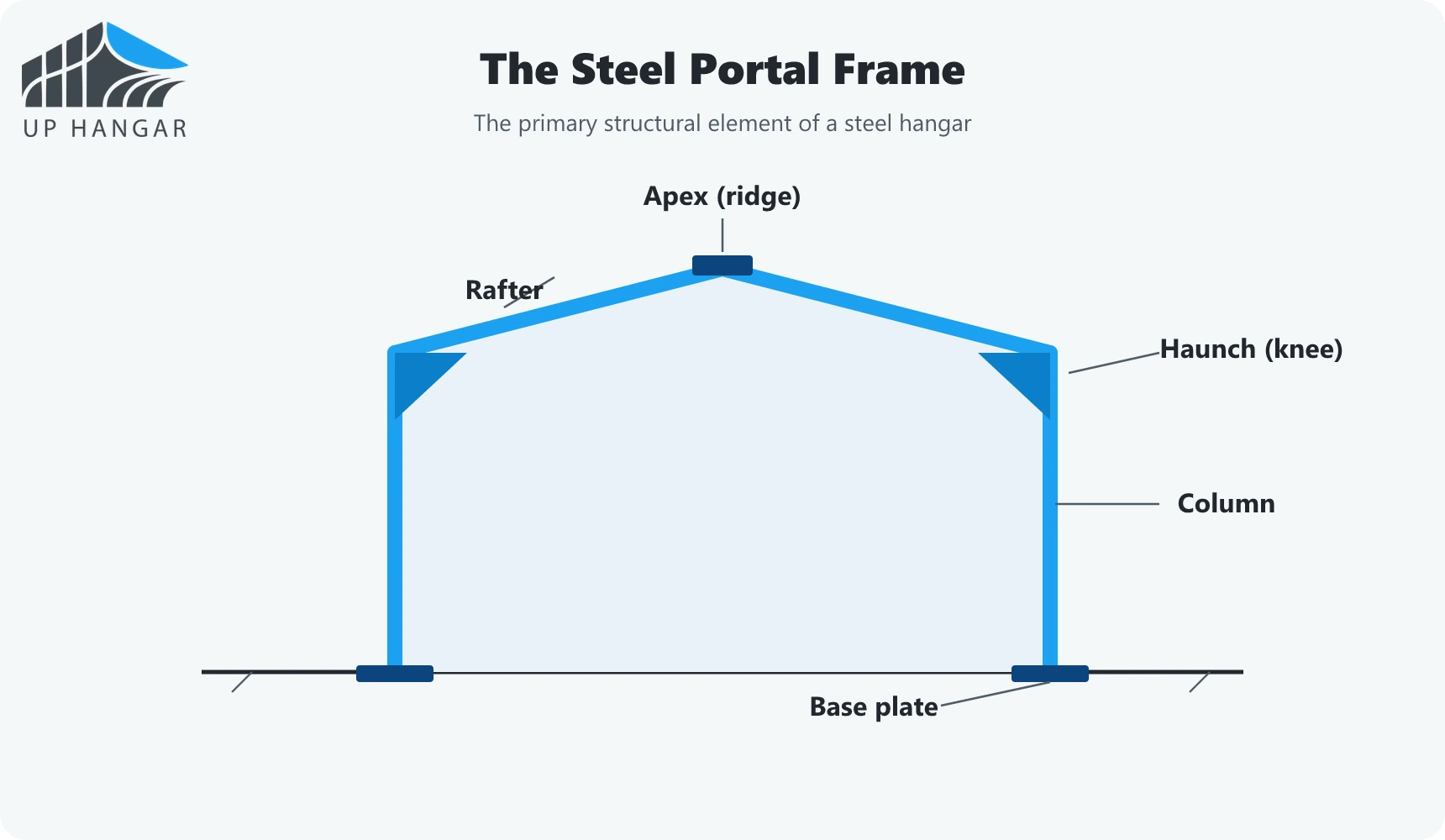
So corrosion is resisted at three levels: a design that avoids trapping moisture, an appropriate protection system, and periodic maintenance. Neglecting any level overloads the others beyond their capacity. So we address protection at design stage, not after the structure is complete. See steel hangar design principles.
Other anti-corrosion design details: avoiding horizontal surfaces that collect water and dust where possible, sealing or draining hollow sections so they do not trap moisture inside, and leaving enough space between members to allow painting and inspection later. Two members pressed together are hard to paint between and trap moisture in the gap between them.
These details cost almost nothing at design but save much in life, while remedying them after building is costly or impossible. So real protection starts at the design table, not in the paint tank, and a builder who thinks about corrosion early hands you a longer-lived building at the same cost.
7. What is the role of warranty, maintenance and Syrian considerations?
We warrant our work for 15 to 25 years with periodic maintenance after handover, because protection is not a one-time coat but a system that is followed up. An honest warranty comes with a written specification and agreed maintenance, not an open-ended verbal promise.
Locally in Syria, the site sets the protection severity: coastal areas demand a much heavier system because of airborne salt, industrial areas demand pollutant resistance, and a dry interior needs the lightest. State your location precisely so it is classified correctly.
And seasonal rain makes gutter drainage and preventing water pooling part of protection, not maintenance alone. Local considerations in building a steel hangar in Syria, and maintenance in steel building maintenance guide.
8. A protection specification checklist before signing
Make sure your quotation states these, not the word "paint" alone:
- Environment classification: interior, exterior, industrial, coastal.
- Surface-preparation grade: from hand cleaning to sandblasting.
- The system: primer then epoxy (or galvanizing) and the number of coats.
- Dry film thickness: in microns.
- The site touch-up item after erection.
- Warranty and maintenance: their duration in writing.
A common question: why does an expensive coating sometimes fail early? Usually because of poor surface preparation beneath it, not the paint itself. Expensive paint does not compensate for deficient preparation; the life is in the whole system, not the final layer. See our services, or request a quotation stating the protection system, or contact us.
- Corrosion protection
- Surface preparation
- Epoxy
- Warranty
Frequently asked questions
What is the corrosion protection system?
Three layers: surface cleaning, then primer for adhesion and electrochemical protection, then an epoxy coat as a barrier against moisture. The system is chosen by the environment classification.
Why is surface preparation half the life of the protection?
Because a coating needs a clean, rough surface to key into. Mill scale, rust and oils prevent adhesion, so the coating separates. Excellent paint over an untreated surface fails early.
Paint or galvanizing?
Paint is most common and flexible and allows easy site repair; galvanizing protects even at a scratch but is harder to repair and suits small members. The decision follows the environment, member and budget.
How is the environment classified before choosing the system?
Dry interior is lightest, then ordinary exterior, then industrial, then coastal and saline, the most severe. Proximity to the coast demands a much heavier system because of airborne salt.
How long is the protection warranty?
We warrant our work 15 to 25 years with periodic maintenance after handover, as protection is a system that is followed up, not a one-time coat. An honest warranty comes with a written specification and agreed maintenance.
Have a project like this?
Leave your number and a short brief, and we will come back with a preliminary study and clear quotation items within one business day.
Read next
 Cladding and insulation
: preventing condensation and leaks
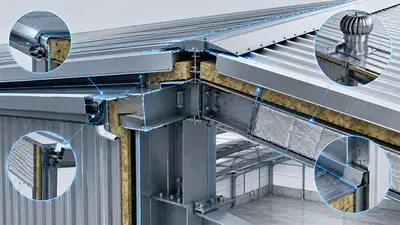
What fails on a roof is rarely the sheets. It is the details at edges, corners, and penetrations.
 Cladding and insulation
Steel building insulation guide
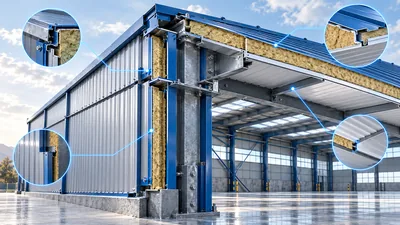
Excellent insulation with neglected thermal bridges performs averagely. Where paid-for insulation loses its value.
 Protection and maintenance
Corrosion protection: from surface preparation to the coating system
An excellent coating over an unprepared surface fails before an average coating over a well-prepared one.