
Tartus is a coast like Latakia, but its economic character is different: a second commercial port with active goods traffic around it, a sea-fishing sector that needs chilling and storage, and coastal tourism that generates demand for warehouses and service facilities. The structural principle is the same, but what governs the hangar here before anything else is marine humidity and the constant condensation it imposes, not merely the rust visible on the surface. We work in Tartus and all governorates, and we design for this humid environment with a logic that starts from preventing condensation and passes through insulation and a vapour barrier before it reaches the protection layer. This article gathers what changes locally when you build a steel hangar in Tartus specifically: from humidity and marine condensation, to port facilities and coastal storage, fish chilling, cladding and insulation for tourism and warehouses, and the protection that keeps the structure sound.
Note: The local considerations are general and vary by site; they do not replace a soil investigation, a signed structural study for the specific project, and a licence from its municipality.
1. Humidity and condensation in the marine environment
What distinguishes Tartus from the interior is not the rain but the permanent humidity in the air all year. This humidity creates constant condensation inside untreated steel buildings: when the inner face of the sheet cools at night or in a colder season, water vapour condenses on it, drips inside, wets the goods, and starts rust from where it is not seen early.
Condensation in Tartus is a daily problem, not a seasonal one, and this reverses the order of priorities in design: we start from preventing humid air from reaching the cold surface before thinking about anything else. A vapour barrier with correct insulation is the root solution, not drying the air after it has entered, because preventing contact is cheaper and more durable than treating its consequences.
That is why we treat any building that is occupied or used for storage as a high-humidity case by default in Tartus, designing the ventilation to drain trapped moisture rather than hold it under the roof. Good design leaves no pockets of stagnant air that condense at night and return as a problem every morning.
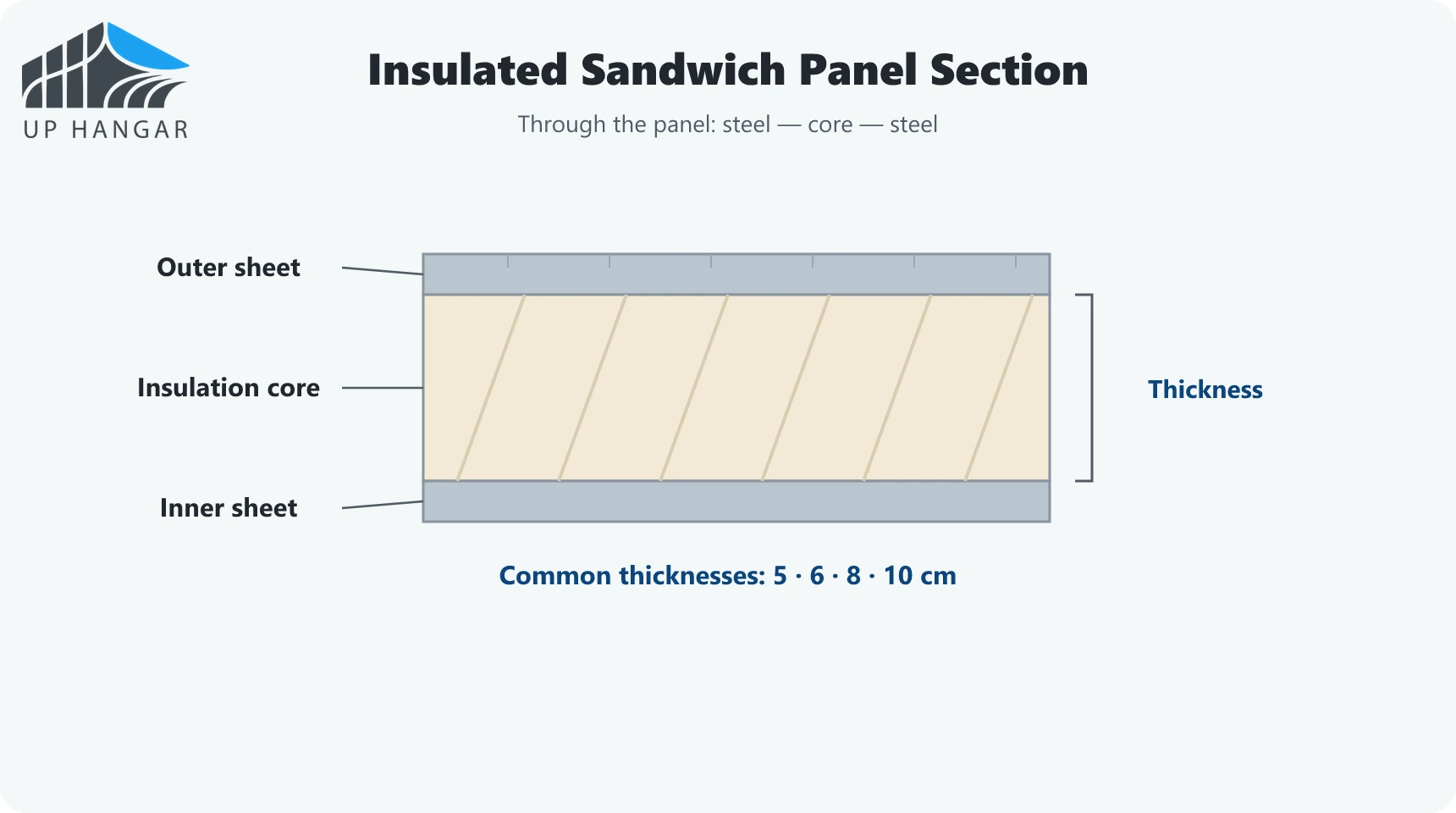
All of this is a design decision taken before execution, because adding it to a standing building is far harder and less effective. The detail of preventing condensation and leaks and of choosing the layers is in cladding and insulation: preventing condensation and leaks.
2. Port facilities and coastal storage
The commercial port of Tartus generates a particular demand for warehouses that serve goods traffic: wide-span buildings that accommodate dense storage and forklift handling, with an eaves height that allows handling tall goods and containers. The steel hangar suits this exactly because it offers an interior free of intermediate columns that makes organising storage and work movement easier.
Port-linked storage imposes practical considerations settled early: wide doors suited to trucks, a floor that carries storage and handling loads, and clear movement paths that do not cross dangerously. These decisions are taken in design because changing them after construction is costly and disrupts operation.
And proximity to the sea keeps protection and insulation present even in an ordinary goods warehouse, because salty humidity works on both the structure and the goods. That is why we tie the coastal warehouse specification to the actual use, not to an inland warehouse template. For chilled storage and logistics facilities specifically, see cold-storage and logistics buildings.
What changes in cost between a port site and an inland one is access, handling and the protection level, not the steel price itself. Describing the site accurately when requesting a quote brings the figure closer to reality, and the general picture of what differs between governorates is in building a steel hangar in Syria.
3. Corrosion protection in the Tartus air
The coastal air in Tartus carries salty humidity that works on every exposed metal surface, which makes corrosion protection a condition, not a choice. But the angle of treatment here starts from the permanent humidity that keeps surfaces damp for longer, extending the time the metal is exposed to corrosion compared with a climate where the surface dries quickly.
The system we use: careful cleaning that removes moisture and salts, then a primer coat, then a protective epoxy layer, with special care for edges, weld seams and bolt heads because they are the weakest points of any coating system and the first place rust begins. We design the details to drain water rather than trap it so no pools of moisture remain on the members.
The difference between a structure that lasts and one that pits early is these layers and the care of execution, not the price per ton alone. That is why we set out the protection system explicitly in the quote. The principles of resisting harsh environments are in the corrosion protection guide, and the engineering detail in protecting metal from rust step by step.
Periodic maintenance stays a condition for the warranty to stand: the 15 to 25 year warranty assumes a sound protection system kept up by periodic inspection that treats any scratch early before it becomes a spreading rust source in a humid environment that does not forgive neglect.
4. Fish cold storage and seasonal storage
The sea-fishing sector in Tartus generates a particular need for chilling and cold storage near the shore: facilities that keep the fresh product at a controlled temperature and absorb fluctuating quantities between one season and another. The steel hangar suits this because it offers a wide clear span that makes dividing cold rooms and organising sorting and packing lines easier, with no columns to obstruct movement.
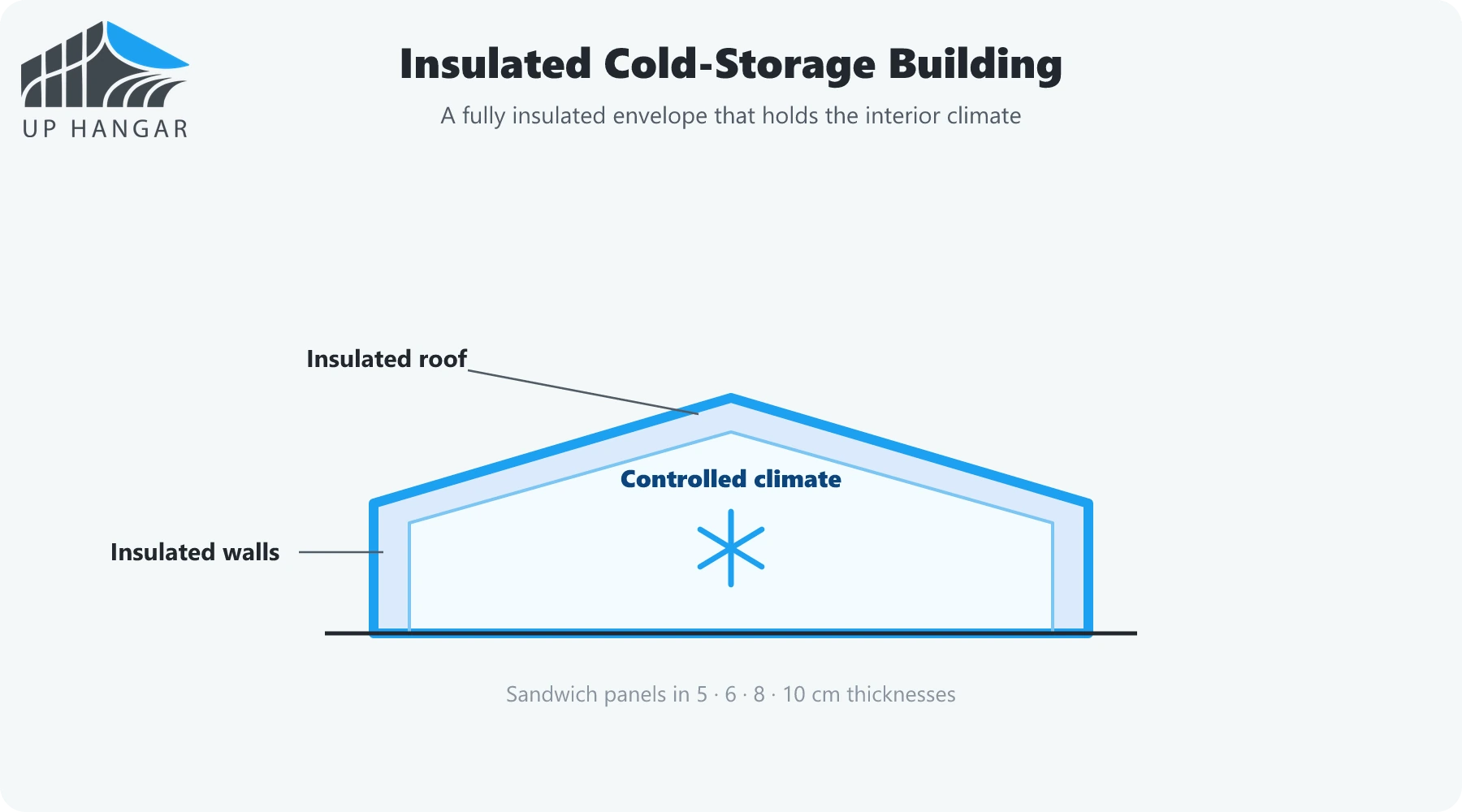
Chilling near the sea doubles the importance of insulation and a vapour barrier, because the large temperature difference between the cold interior and the humid exterior creates constant condensation on surfaces and doors. That is why we tie insulation thickness and cladding type to the required temperature, not the budget; insulation here lowers the annual cooling cost and protects the product at once.
And the hangar's flexibility suits the seasonal character: a space that can be reorganised to serve the peak season and then be used as wider storage outside it. The detail of cold-storage facilities is in cold-storage and logistics buildings, and the cost items in how to read a steel hangar quotation.
5. Cladding and insulation for tourism and warehouses
Coastal tourism in Tartus generates demand for varied facilities: service warehouses, garages, halls, and auxiliary buildings that need an acceptable appearance and good thermal performance at once. The steel hangar meets this with fast execution and flexibility in internal division, with cladding chosen to suit the use and the humid climate, not the budget alone.
The choice of cladding and insulation in facilities that are occupied or visited by people is an operating decision: insulation controls temperature and prevents condensation, and good external cladding forms the first line against salty humidity. The available insulation thicknesses (5, 6, 8 and 10 cm) and cladding type (sheet, sandwich panel or skorit) are chosen by use.
And speed of execution is an important local advantage near tourist seasons: fabrication runs in parallel in the shop with foundation pouring on site, so when the steel arrives the work is assembly, not fabrication, which shortens the time to readiness. The full picture of what is calculated in the project is in the guide to building a steel hangar in Syria.
And corrosion protection stays present in every coastal use, because marine humidity does not distinguish between a goods warehouse and a service facility. That is why we design for the coast with a unified protection specification and adjust insulation and division by function.
6. Foundations and access on coastal sites
The soil of Tartus varies from site to site along the coastal strip and the plain behind it, and some sites near the shore or watercourses have a groundwater level that rises seasonally. This level directly affects foundation depth and the footing's waterproofing, because salty ground moisture attacks concrete and reinforcement as it attacks exposed metal.
The steel frame is light, so its isolated footings are smaller than a concrete building of the same function, an advantage on weak coastal soil. But uplift under sea winds stays decisive in the footing design, because a light building can be lifted by wind, not only pushed. That is why foundation cost cannot be honestly estimated before a soil test; the test alone sets the footing area, depth and reinforcement.
Access has its own character in Tartus: sites near the port or fishing harbours can be dense and tight to manoeuvre, and coastal tourism areas may impose constraints on heavy-machinery movement in certain seasons. The structure arrives on trucks and is lifted by cranes that need space and a clear path, so we study the approach road width, the ground's capacity to carry the crane and overhead obstructions early, not on erection day.
Access surprises cost more than structure surprises because they appear with the crew already on site where retreat is hard, which makes an early site study a real saving rather than a formality. We advise photographing the approach road to the plot and measuring its narrowest point before contracting, because this simple information changes the erection plan and its cost. What actually gets calculated in the footing is explained in steel building foundations.
7. We work across all governorates, and the next step
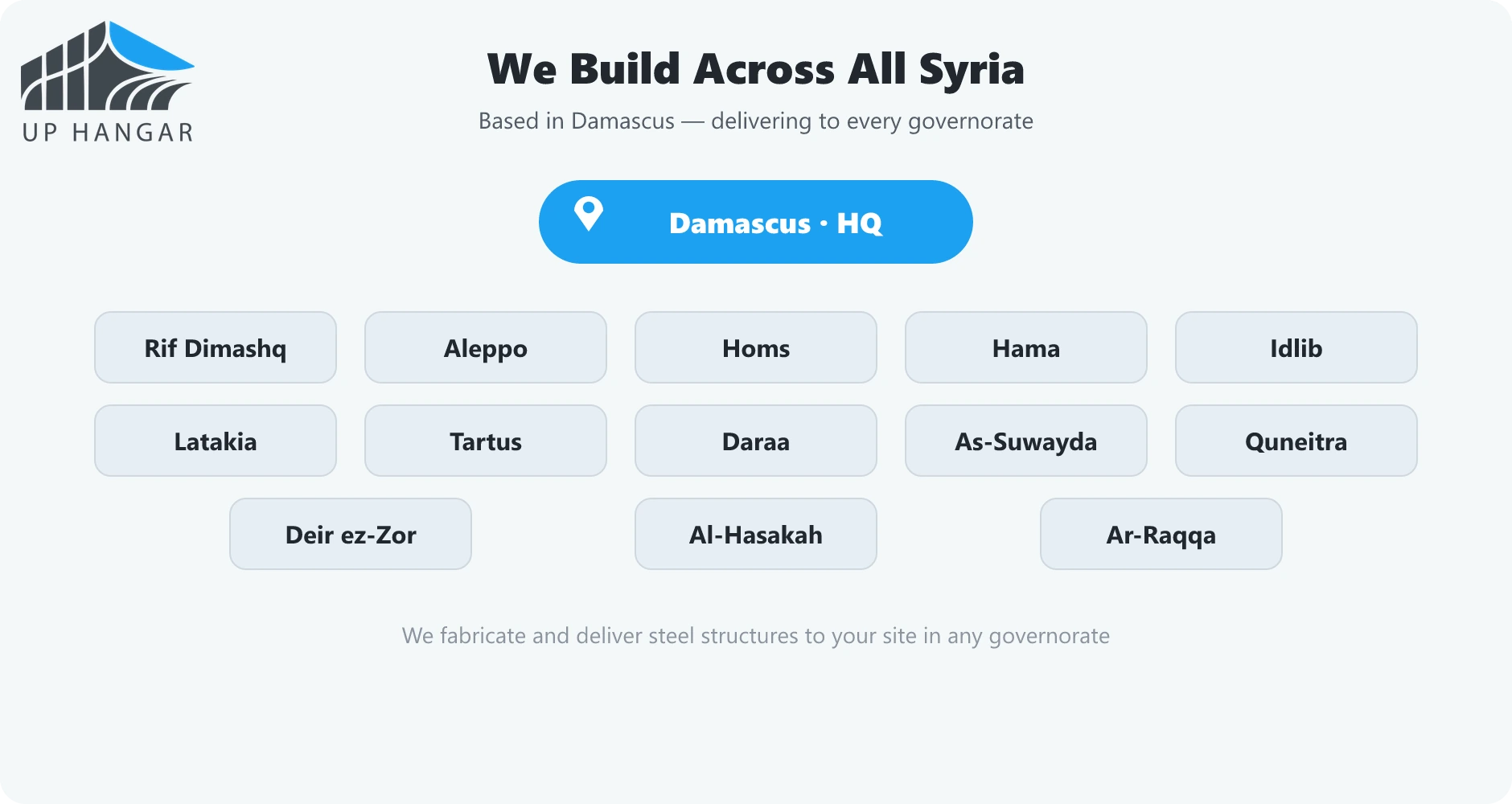
We build in Tartus and all governorates, at the same specification and the same 15 to 25 year warranty. What changes in Tartus is the intensity of humidity and condensation treatment, the insulation level, and the care of protection and maintenance — not the quality of the work nor the durability of the structure.
Common questions:
Why is condensation the first problem in Tartus? Because marine humidity is permanent all year, so water vapour condenses on the cold inner surface, drips onto goods and starts rust from the inside. The solution is insulation, a vapour barrier and correct ventilation.
Is the hangar suitable for chilled fish storage? Yes, its wide clear span makes cold rooms and sorting lines easier, and it needs high insulation and a vapour barrier to control temperature near the sea.
What raises cost locally in Tartus? The level of humidity and insulation treatment, the protection system, and access and handling near the port — not the steel price itself.
Contact us to discuss your site in Tartus, or request a quotation with your dimensions and use, and see our delivered projects.
- Tartus
- Coast
- Humidity
- Condensation
- Port
Frequently asked questions
Why do steel buildings in Tartus need special care for condensation?
Because marine humidity is permanent all year, so water vapour condenses on the cold inner face of the sheet, drips onto goods and starts rust from the inside. The solution is correct insulation, a vapour barrier, and ventilation that drains moisture.
Is a steel hangar suitable for commercial port warehouses?
Yes, its wide clear span and adjustable eaves height suit dense storage and container handling, with wide doors and a floor that carries handling loads, all settled in early design.
How does Tartus differ from Latakia in hangar design?
Both are a humid salty coast, but Tartus has a second commercial port, sea fishing and tourism, so local design starts from managing humidity and condensation and port and storage facilities before any other consideration.
Does the hangar suit chilled fish-product storage?
Yes, it offers a wide clear span for cold rooms and sorting and packing lines. It needs high-performance insulation and a tight vapour barrier because the temperature difference near the sea creates constant condensation.
What raises cost locally in Tartus?
The level of humidity and insulation treatment, the corrosion protection system, access and handling near the port, and foundations after a soil test — not the steel price itself, which does not change by governorate.
Have a project like this?
Leave your number and a short brief, and we will come back with a preliminary study and clear quotation items within one business day.
Read next
 The complete guide
Steel hangar construction: the complete guide
Everything a decision-maker needs before building a steel hangar — from span and cost to protection and build time, with figures from delivered projects.
 For sale
Steel hangars for sale in Syria
Buying a steel hangar is not picking a product off a shelf; it is ordering a structure engineered to your use and your site. Here is what you buy, how, and at what price.
 Cost and pricing
How much does a steel hangar cost?
Cost is calculated by the tonne, not the square metre alone. Here are the real price items, and where a cheap quote is a trap.